What Is Direct-to-Garment Printing? Process, Benefits, and Screen Printing Comparison
Table of Contents
Understanding Direct-to-Garment Printing
DTG printing, or direct-to-garment printing, is a digital textile-printing method in which a specialized inkjet printer applies water-based inks directly onto a finished garment. Rather than creating screens for each color, the printer receives a prepared digital artwork file and deposits ink in the required image areas. This makes DTG especially useful for photographic artwork, gradients, small text, and designs containing many colors.
Most DTG systems use process colors—commonly cyan, magenta, yellow, and black (CMYK)—to reproduce full-color artwork. When printing on dark or strongly colored garments, the system may first print a layer of white ink, called an underbase. The underbase helps colored inks remain visible and more closely match their intended appearance instead of being visually absorbed by the garment color.
Garment choice strongly affects the result. DTG commonly performs well on smooth, absorbent cotton-rich fabrics because their fibers provide a receptive surface for the ink. Blends can also be printed, but results may vary with fiber content, fabric construction, surface texture, dyes, finishes, and the amount of synthetic fiber present. Rough, heavily textured, water-repellent, or highly stretchy materials can reduce image definition, cause uneven ink coverage, or affect wash performance. A clean, flat garment surface supports sharper detail and more consistent color.
Development of DTG Printing Technology
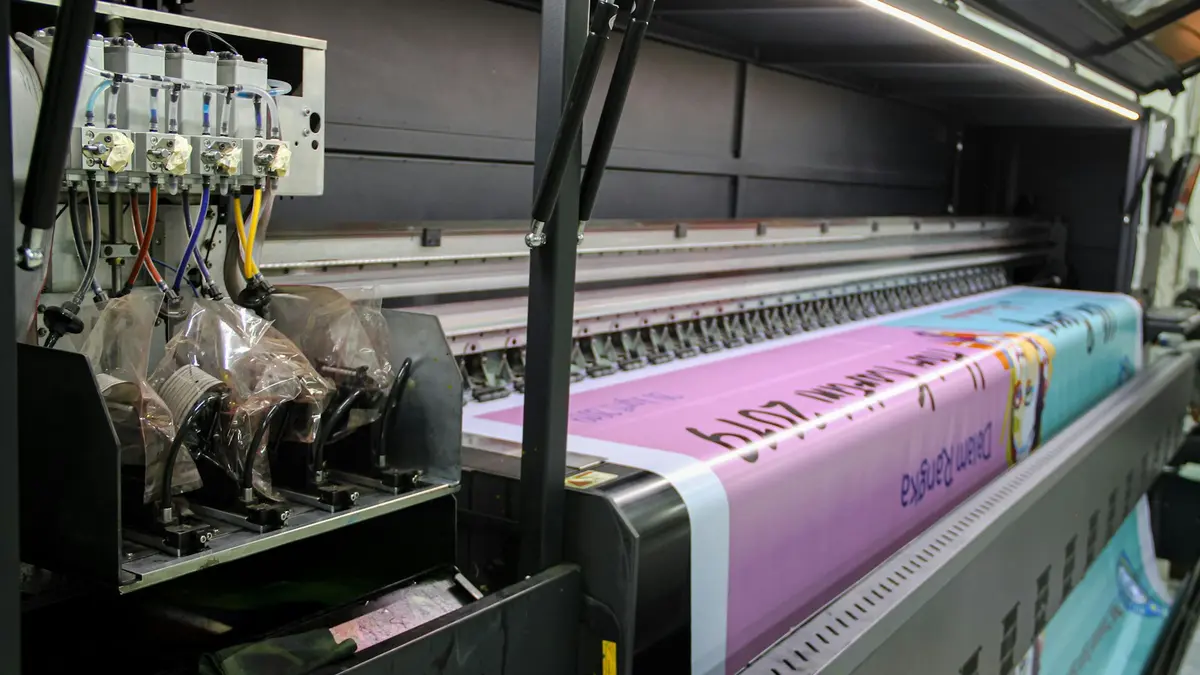
Early garment inkjet systems demonstrated that digital files could be printed directly onto apparel, but commercial use depended on making the process more reliable for everyday production. Development has therefore focused on the full print system rather than the printer alone: ink delivery, printhead performance, garment handling, pretreatment, software, and heat fixing all influence the finished print.
Modern equipment has improved control of droplet placement and print resolution, while ink systems have become better suited to textile applications. White ink has been an important area of development because its pigments can settle if not properly managed. Circulation and maintenance systems help keep white ink more uniform and reduce the risk of clogged nozzles or inconsistent underbases.
RIP software, short for raster image processor software, has also expanded DTG capability. It translates artwork into printer instructions, manages color output, creates white-underbase data where needed, and gives operators control over ink density and print modes. Improvements in pretreatment chemistry and curing equipment have further supported more repeatable adhesion, opacity, and wash durability. Even so, DTG remains a process that requires routine calibration, cleaning, and quality checks.
Source: Unsplash
Direct-to-Garment Printing Workflow
A dependable DTG result comes from a connected workflow rather than from printing alone. Artwork must be prepared for the selected garment and print location; pretreatment must be controlled when required; the garment must be loaded accurately; and the ink must be cured under suitable conditions. A weakness at any stage can remain visible in the final product.
A. Preparation Before Printing
Pre-printing work establishes whether the garment, design, and production settings are compatible. Operators typically verify garment color and composition, inspect the print area for folds or contamination, confirm placement requirements, and make sure the printer is ready for the intended job. Production consistency depends on recording and repeating suitable settings for comparable garments and designs.
1. Artwork Intake
Artwork intake begins with checking the supplied file and confirming what the customer expects to receive. Teams assess file format, physical dimensions, image resolution, transparent areas, fine details, color expectations, and whether the design is intended for a light or dark garment. Raster artwork that is too small for its required print size may appear soft or pixelated, while thin lines and low-contrast details may not reproduce as expected on fabric.
The intended print location should also be confirmed before file processing. A centered chest print, left-chest graphic, sleeve print, or back print each requires different placement instructions and may have different printable-area limits. The production team should confirm garment size range, design position, quantity, and any requirements for personalization or variable data before approving the artwork for output.
2. Artwork Preparation
The approved artwork is prepared in RIP software or a related production workflow. This stage includes setting the final print dimensions, handling transparent pixels, selecting color-management settings, and defining the appropriate print mode. For dark garments, the operator usually generates a white underbase beneath selected image areas. The underbase may be choked slightly inward at edges to reduce the chance of white showing around the color image.
Color on fabric is not identical to color on a backlit screen. Fabric shade, fiber content, ink absorption, and underbase quality can all affect the appearance of the finished image. Test prints are useful when color matching, fine detail, gradients, or small lettering are important. They allow the team to assess whether the selected garment and settings reproduce the intended design acceptably before full production begins.
3. Garment Pretreatment
Pretreatment is a preparatory liquid applied to garments before printing in many white-ink DTG applications. Its main function is to help white ink adhere and form a more even printable layer on the fabric. This improves underbase opacity and supports more uniform color printing above it. Pretreatment is particularly important on dark garments because the white underbase is responsible for separating the colored image from the garment color.
Application must be even and controlled. Too little pretreatment can contribute to weak opacity or poor adhesion, while too much or uneven application can create visible marks, discoloration, stiff areas, or inconsistent printing. After application, the garment is normally dried or pressed according to the pretreatment and equipment instructions so that the print zone is dry, smooth, and ready for ink deposition.
Light garments may not need a white underbase, so their preparation can be simpler. However, they still require a clean, lint-free, flat print surface. Pretreatment requirements should be determined by the ink system, garment color, fabric type, and supplier instructions rather than assumed to be identical for every job.
B. Garment Printing Stage
The prepared garment is placed on the printer platen, the flat support that holds the print area during output. It must be loaded without stretching or skewing the fabric. Excess material should be kept clear of the print zone, and the surface should be smooth enough to avoid wrinkles or raised seams interfering with the printhead path. Correct platen height is also important because a garment that is too high can risk contact with the printhead, while an unsuitable gap can affect print quality.
For dark garments, the printer generally applies the white underbase first and then prints the CMYK color image over it. Accurate registration between these layers is necessary so that color aligns with the underlying white layer. On light garments, the printer may apply color inks directly to the fabric without white ink, depending on the artwork and production system.
Operators monitor nozzle checks, ink condition, garment alignment, and print output throughout production. Missing nozzles can cause banding, broken lines, or uneven color. Lint, loose fibers, moisture, platen contamination, and fabric movement can also create defects. A controlled print environment and regular machine maintenance are therefore central to repeatable DTG production.
C. Post-Printing Operations
After printing, the ink must be cured with heat so it becomes properly fixed to the garment. Curing is essential to wash durability and surface performance; a print that looks acceptable immediately after output may still fail if it has not received the correct heat treatment. Depending on the production setup, curing may use a heat press, conveyor dryer, tunnel dryer, or another approved system.
Curing conditions are not universal. Temperature, dwell time, pressure where applicable, garment composition, ink formulation, and equipment design all affect the required process. Operators should follow the instructions provided by the ink, printer, curing-equipment, and garment suppliers, then validate their own production conditions through suitable internal quality checks.
Once cured, garments should cool before handling and packing. Final inspection typically checks print placement, image completeness, color appearance, visible pretreatment residue, surface defects, and garment damage. Only garments that meet the agreed production standard should be packed. When durability is critical, manufacturers may use wash testing or other defined quality-control procedures to confirm that the selected materials and process are performing as intended.
Advantages and Limitations of DTG Printing
DTG printing offers a flexible route to full-color garment decoration. Since artwork is handled digitally, it does not require separate screens for each color. This can reduce setup work for short runs and allow economical production of designs that would be complicated to screen print, such as photographs, tonal illustrations, or individualized graphics. It also supports on-demand production, where garments are printed in response to confirmed orders rather than decorated in large advance batches.
The method is particularly useful when orders contain many colors, frequent artwork changes, or personalized names and numbers. A different file can be sent to the printer without remaking screens, provided the garment and print settings remain suitable. This flexibility can help decorators manage sampling, e-commerce fulfillment, event merchandise, and small branded collections.
However, DTG is not automatically the best option for every garment or order. Print speed is generally less favorable for large volumes of one repeated design than a well-organized screen-printing line. Dark garments can require pretreatment, white ink, longer print cycles, and additional quality control. White-ink maintenance is also an ongoing operational requirement, particularly where production is intermittent.
Results are sensitive to fabric composition, surface condition, pretreatment consistency, and curing. Cotton-rich garments commonly provide a more predictable starting point than fabrics with high synthetic content or strong moisture-management, water-repellent, or stain-resistant finishes. Cost effectiveness depends on order quantity, number of designs, artwork complexity, garment color, production turnaround, expected print feel, and required durability. The best method is the one that meets those requirements with reliable quality and appropriate production economics.
Source: Unsplash
DTG Printing Compared With Screen Printing
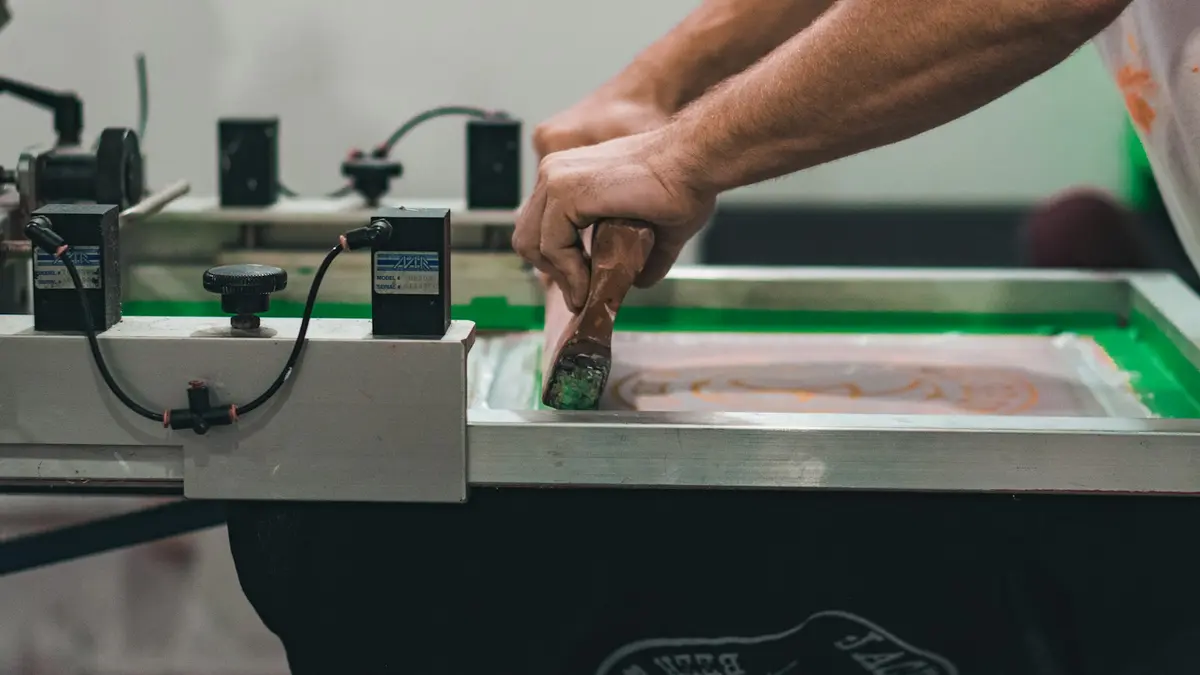
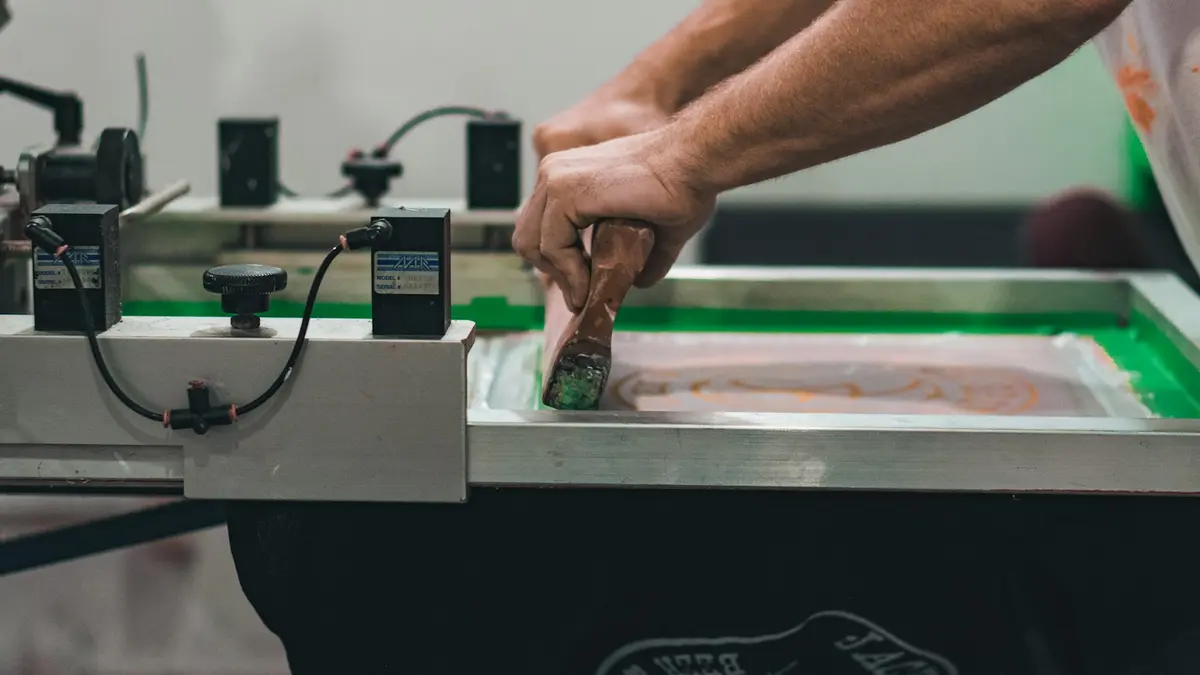
DTG printing and screen printing both decorate textiles, but they build the image in different ways. DTG applies a digital image directly to the garment through inkjet technology. Screen printing pushes ink through a prepared mesh screen, with separate screens and print stations commonly used for different colors or image components. Neither method is universally better; the appropriate choice depends on the product and production brief.
| Factor | DTG printing | Screen printing |
|---|---|---|
| Setup | Digital file preparation and printer setup; no color screens are needed. | Screens, artwork separations, ink preparation, and press setup are typically required. |
| Artwork suitability | Well suited to detailed images, gradients, photographs, and variable designs. | Effective for bold graphics, spot colors, repeated artwork, and specialty ink effects. |
| Color handling | CMYK printing can reproduce many colors in one workflow; dark garments may need white ink. | Spot colors can be mixed and controlled precisely; each added color can increase setup complexity. |
| Short runs | Often practical because setup is relatively limited. | Setup time can make very small runs less efficient. |
| Larger repeated runs | Throughput may become a constraint, especially on dark garments. | Often efficient when the same design is repeated at higher quantities. |
| Print feel | Can be relatively soft when ink is absorbed into suitable fabric, though white underbases may add body. | Feel varies widely with ink type, deposit thickness, fabric, and curing method. |
DTG is commonly chosen for short runs, on-demand fulfillment, highly detailed artwork, and jobs where every garment may carry a different design. Screen printing is often selected for larger runs of the same artwork, especially when production speed, strong spot-color control, or specialty effects are priorities. Screen printing can also use inks and techniques that create effects not normally achieved through standard DTG output, such as metallic, puff, or high-density prints.
Fabric remains a deciding factor for both methods. Cotton-rich jerseys may work well for DTG, while screen-printing systems can be configured for a broad range of textile constructions and end uses. For either process, the buyer and producer should evaluate the garment, artwork, quantity, target price, required hand feel, intended laundering, color expectations, and delivery schedule. Sampling on the actual production garment is the most reliable way to confirm that the selected method meets the project requirement.
References
- https://textilelearner.net/what-is-dtg-printing-process-benefits-pros-cons. https://textilelearner.net/what-is-dtg-printing-process-benefits-pros-cons
- Elevating Quality and Safety: The Importance of Technical Textile Standards | SciTechnol. https://www.scitechnol.com/peer-review/elevating-quality-and-safety-the-importance-of-technical-textile-standards-5Sgm.php?article_id=23863
- Research on the competitive situation and technical opportunities of global new textile materials technology R&D. https://pmc.ncbi.nlm.nih.gov/articles/PMC12043175
- Materials science takes textiles to new heights - Textile Technology Source. https://textiletechsource.com/2025/07/28/materials-science-takes-textiles-to-new-heights
- New Fabric Test Material Could Help Strengthen Domestic Supply Chain for Textiles and Clothing | NIST. https://www.nist.gov/news-events/news/2026/07/new-fabric-test-material-could-help-strengthen-domestic-supply-chain
- Standards - Textile Exchange. https://textileexchange.org/standards
- Textiles – Materials Science (TMS) - Journal of Engineering Research and Sciences (JENRS). https://www.jenrs.com/sections/tms
- Understanding Technical Textiles: Key Materials and Uses. https://acmemills.com/industry-news-blog/technical-textiles